
How office layout impacts the workplace experience.
In recent years, as work cultures and technology have evolved, the design and structure of office spaces have undergone significant transformation. A well-considered layout not only maximises space efficiency but also enhances company culture, employee wellbeing and application, and ultimately drives business performance.
According to the Gensler conducted a survey in 2005 on how poorly designed offices erode productivity 4 out of 5 professionals feel that their job satisfaction is significantly attributed to the quality of their working environment. We spend 1/3 of our life at work so if you want to attract and retain the best talent, you need to offer a working environment that is a pleasure to be in.
Think about your own office experience and how your space requirements shift throughout the day depending on the task at hand. Personally, as much as I love being amongst the buzz and energy of the central office space where ideas are flying about and teams are connected and bouncing off each other, having a quiet corner I can retreat to when I need to get my head down, or having a small meeting room or acoustic pod that I can use for a focused meeting with my colleagues or for a remote Zoom call is all important for me to function optimally throughout my day. Having a space that adapts to me will give me the best chance at optimising my productivity, and it turn enhances my job satisfaction. This is the impact of a well designed office layout.
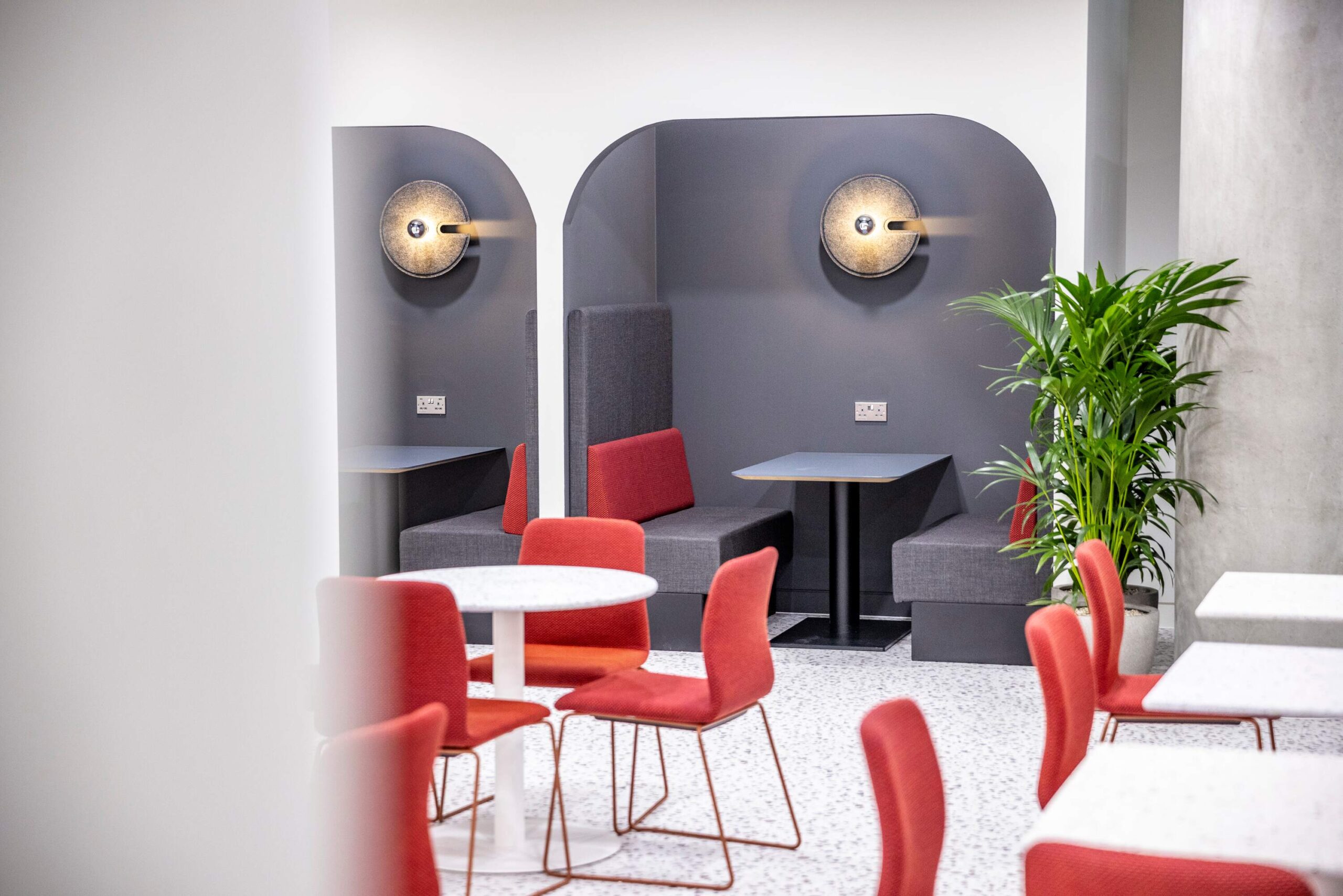
Space design shapes the way teams work. Our clients at AJ Bell are a prime example of this. When we first met the AJ Bell team, they spoke about how their Manchester based office felt closed-off and lacked a ‘flow’ through the space. A closed-off space can lead to closed-off teams. If your staff aren’t talking and interacting with each other regularly throughout the day, it limits opportunities for natural collaboration, networking and relationship building across teams. As we worked with AJ Bell to design their new flagship London office space, we focused on opening the space out. Having an open-plan configuration and providing various working zones, such as private and group work pods and meeting rooms, alcove seating, a large breakout area and separate seating areas in addition to the open plan space though the central office area. Encouraging employees to move rather than having a static work station does a lot for creating a buzz and energy in the office environment.
The balance between open collaborative spaces and quieter work zones for focused task is key. In our experience the most effective layout for the majority of teams is something that incorporates a mix of the two, offering a in office hybrid experience.
How is this achieved?
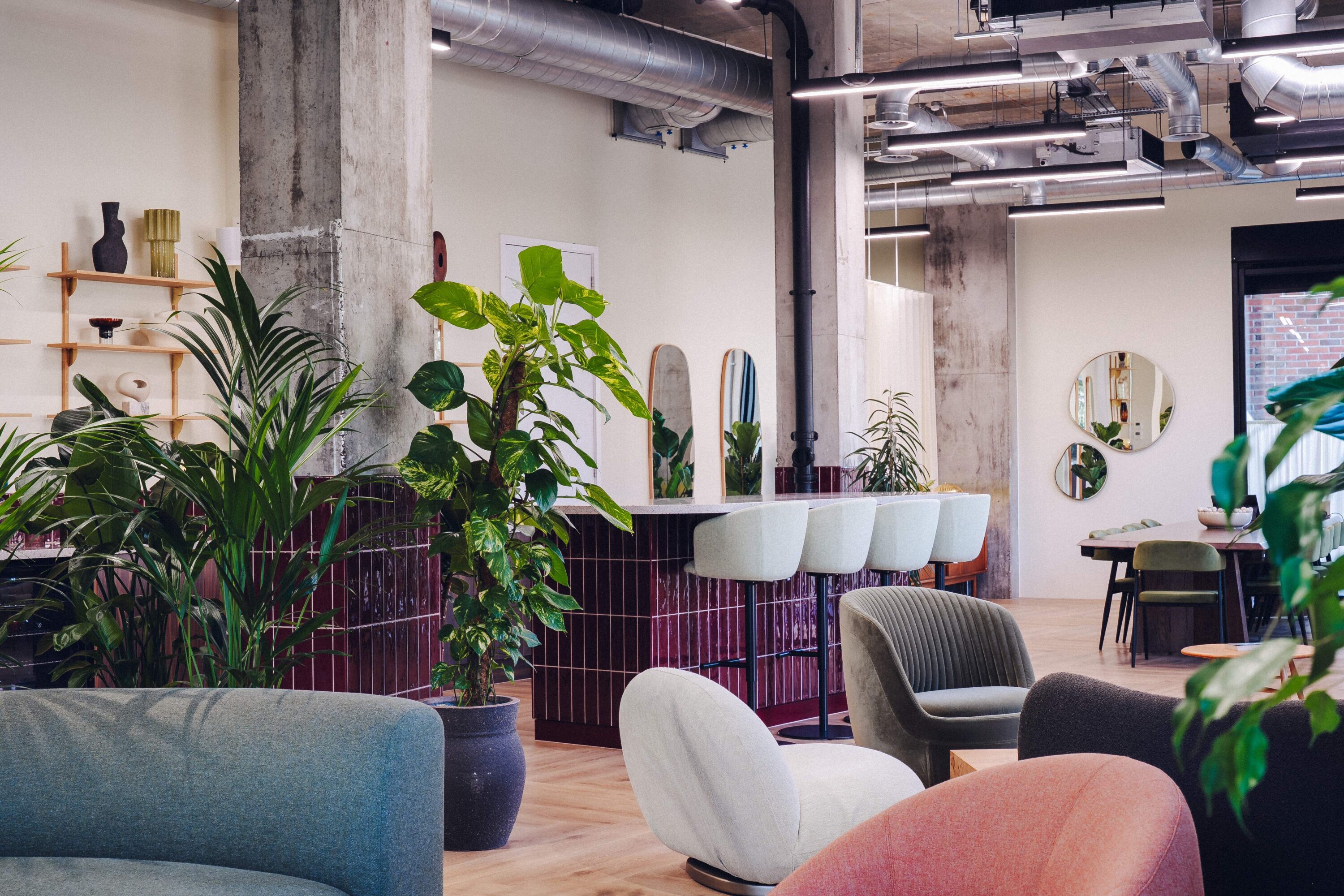
Office layout isn’t just to do with space configuration. Elements such as lighting, furniture, natural elements like biophillia, and the ascetics of design all play a role in shaping a space and invoking a positive work experience for employees and importantly a ‘flow’ through the space.
For example, zoning can be created through the use of furniture placement and plants rather than partition walls. Or when constructing meeting rooms, instead of closing a room off with standard wall panels, placing glass partitions and keeping the flow of light through the space, maintaining a feeling of connectivity whilst offering private working zones.
Acoustics are an essential consideration within the design of a space. Sound transference is one of the most common problems we hear about from new and prospective clients. With advancements in Acoustic Technology, Acoustic treatment can be woven into the design in a way that enhances the aesthetics of a space as well as the functionality. Plants also offer a level of sound absorption as well as air purification and of course.
There are so many ways we can be creative with design to deliver a layout that has impact and works with the bespoke structure of a businesses requirements. The accumulation of these design elements results in better wellbeing for your team, improved productivity and company culture, greater staff retention and at the end of the day increased results for successful years to come.
